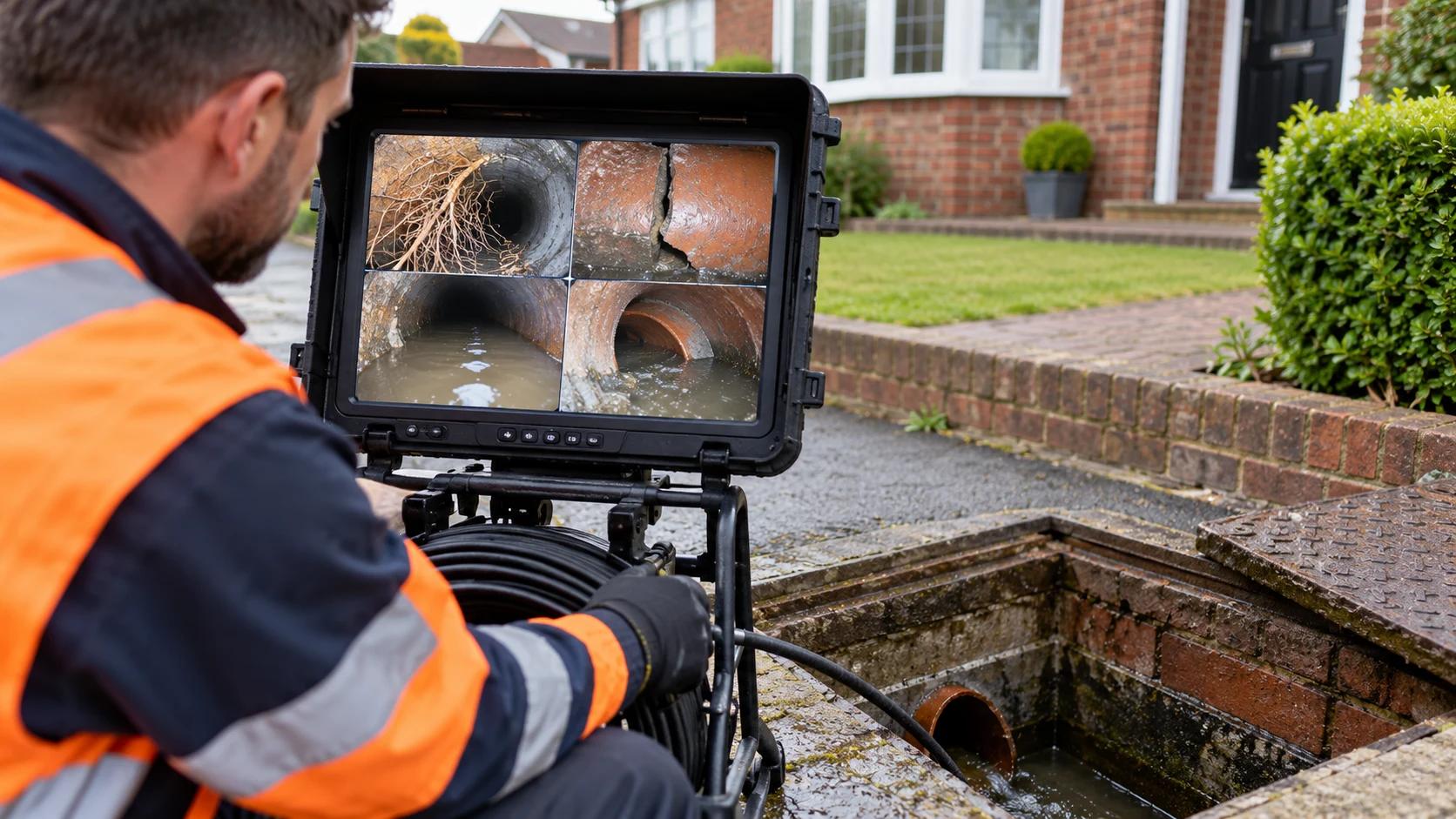
Illustrative photograph showing the sort of defects a domestic CCTV drain survey may reveal.
The short answer
A drain camera can record the internal condition of accessible pipes, including cracks, displaced joints, root intrusion, deposits, standing water and some connection points. Its view is limited to surfaces visible to the camera at the time.
What a useful investigation looks like
An effective investigation begins with a question to be answered. The contractor should identify the section being inspected, explain whether the pipe needs clearing first and record where the camera has travelled. Findings should distinguish visible facts from suspected causes.
What matters in this situation
It will not automatically confirm why a building cracked, whether every visible defect leaks or where an unmarked pipe runs above ground. Accurate reporting matters: the survey should identify the inspected run, distance, direction and severity of defects.
The defects a camera can identify
A drainage camera may show root ingress, fractures, displaced joints, pipe deformation, heavy deposits, standing water and evidence of obstruction. A surveyor can also note pipe material, branches, changes in diameter and the approximate distance of a defect from the insertion point. Those observations can help separate maintenance problems from damage requiring repair. Visibility depends on how clean the pipe is, how much wastewater remains in it and whether the camera can negotiate bends.
What footage does not prove
A camera cannot see through the pipe wall into the surrounding soil. It cannot, by itself, confirm that groundwater or sewage is leaking at a particular rate or that a crack in the house has been caused by drainage. Nor does footage establish legal ownership of a shared run. A tracing receiver, pressure or water test, excavation or building investigation may be needed depending on the question. Treat a statement that “the drain is leaking” differently from a report showing a visible open joint.
How to read the report
A useful report explains which section was surveyed, its approximate length, which access chamber was used and whether all accessible branches were examined. Look for defect locations, clear descriptions, representative images and recommended options. Ask how any grading system used relates to urgency. If a contractor only supplies a short clip of the worst-looking feature without context, request the full survey before authorising costly work.
The sensible next step
Request video and a clear condition report. If the result is being used to justify major repairs, ask the contractor to show the exact footage and explain why the defect requires action now.
Understanding the result
Not every mark seen on a camera image requires repair. The importance of a defect depends on its size, position, effect on flow, evidence of leakage and the condition of the rest of the system. Ask for the footage as well as a conclusion.
Your water or sewerage company can also advise about public-network problems; see Water UK.
Reading a defect in its surroundings
A close view of an open joint can seem severe, but the survey should also show what happens immediately before and after it. Is water flowing normally? Are solids catching? Is there standing water indicating inadequate fall? Does the joint lead to significant root growth? These questions help assess the importance of the image. The camera cannot tell how long a crack has existed, whether it is worsening or how much water escapes through it. A report that goes beyond the evidence should be queried. Ask for the whole recording, not just dramatic stills, and for a sketch showing branch connections. Where structural movement or soil erosion is suspected, the drainage footage should be considered with independent building evidence. It is a valuable diagnostic tool, not a universal answer to every property defect.
Need a local drainage specialist?
If investigation or repairs are needed, you can use MyJobQuote to request contact from local drainage tradespeople.
Get quotes from local drainage specialists ↗