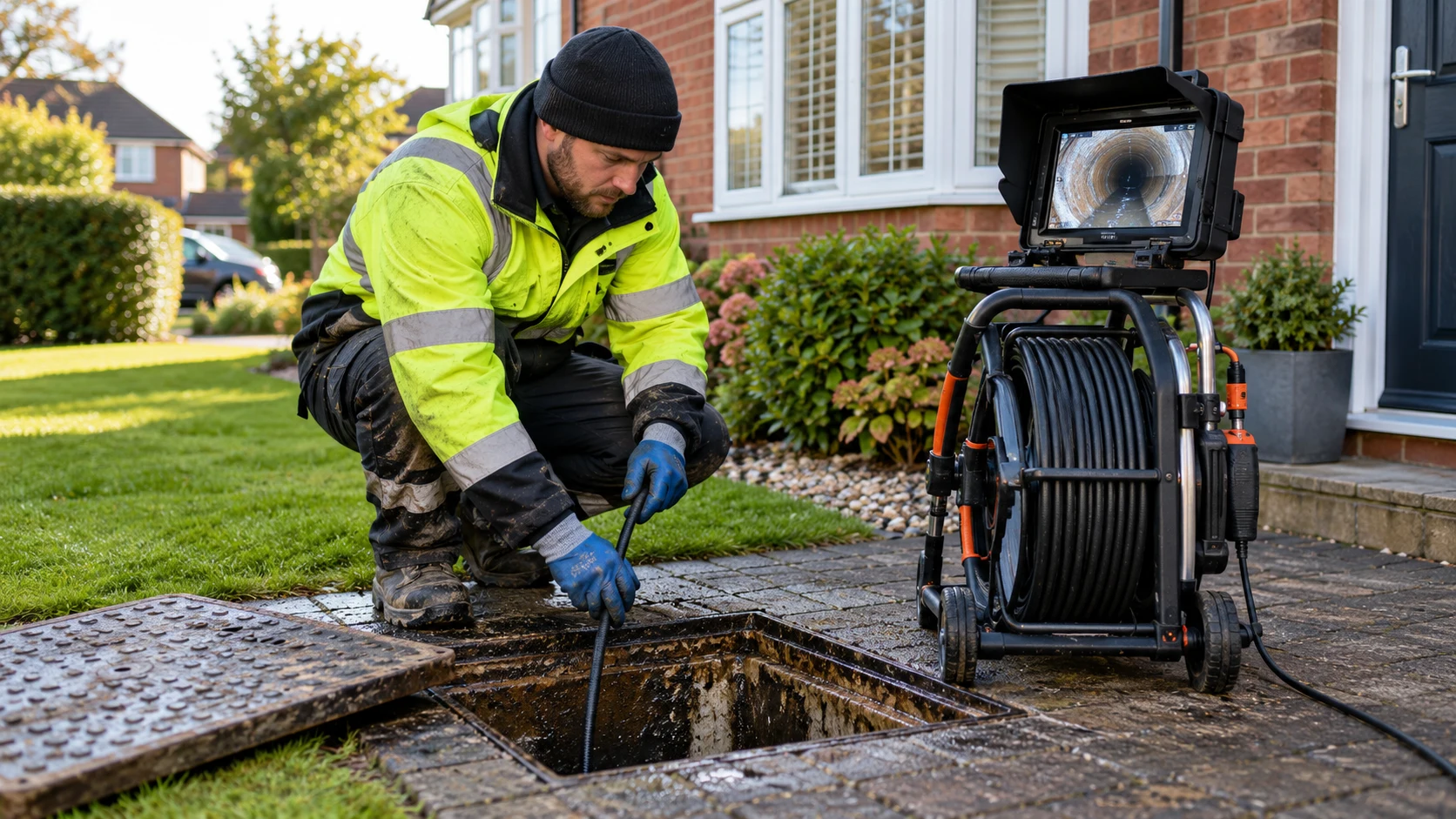
Illustrative photograph of a domestic drain camera survey.
The short answer
A first, straightforward blockage that clears fully and does not return may not justify a camera survey. A survey is more useful when the obstruction recurs, several fixtures are affected or the contractor suspects structural damage.
What a useful investigation looks like
An effective investigation begins with a question to be answered. The contractor should identify the section being inspected, explain whether the pipe needs clearing first and record where the camera has travelled. Findings should distinguish visible facts from suspected causes.
What matters in this situation
If the pipe is still full of dirty water, the camera may not provide a useful view. Clearing and flushing the run first is often necessary. Ask whether the proposed price includes a video, pipe tracing and a written report.
When an ordinary clearance is enough
If a one-off blockage is clearly attributable to material removed at an accessible gully and normal flow returns, paying for a camera survey may add little. However, repeated blockages at the same location, slow drainage from several fixtures or signs of roots and pipe fragments warrant a closer look. A survey is more useful after the obstruction is cleared and the camera can see the wall of the pipe.
Ask what the camera will establish
The contractor should explain whether the aim is to check for structural defects, locate a repeated restriction, determine the pipe route or verify a repair. These questions are different, and one basic camera pass may not answer them all. Find out whether the quoted price includes cleaning, a recording, written condition report and any electronic tracing. If only a verbal opinion is supplied, it may be difficult to assess a subsequent repair quotation.
Use findings proportionately
A minor defect visible on a camera does not always demand immediate work. Ask whether it is restricting flow, likely to worsen or associated with actual leakage. Conversely, a visibly sound portion of pipe does not rule out problems farther along a branch the camera did not reach. Keep the report and footage; they are useful if the problem returns or if a second contractor offers a different diagnosis.
The sensible next step
The purpose should be clear before the survey starts: confirming a suspected defect, locating it or checking the condition after repairs. A blanket recommendation for CCTV after every blockage is not evidence of need.
Understanding the result
Not every mark seen on a camera image requires repair. The importance of a defect depends on its size, position, effect on flow, evidence of leakage and the condition of the rest of the system. Ask for the footage as well as a conclusion.
Your water or sewerage company can also advise about public-network problems; see Water UK.
What changes after a second or third blockage
A drain that blocks once because of an obvious obstruction may need no more than thorough clearance. A drain that blocks again within a short period needs a different question answered: why has the restriction returned? Roots through a joint, a persistent offset or an inadequate gradient are possibilities. Explain the pattern to the contractor and ask to inspect the full affected section after clearing. A survey through a pipe full of debris can produce weak evidence and premature recommendations. Where the report finds a defect, ask whether that defect is demonstrably trapping solids or allowing leakage. If the problem is in a shared run, ownership should be checked before authorising private repairs. The aim is to prevent another emergency, not merely to collect another camera video.
Need a local drainage specialist?
If investigation or repairs are needed, you can use MyJobQuote to request contact from local drainage tradespeople.
Get quotes from local drainage specialists ↗