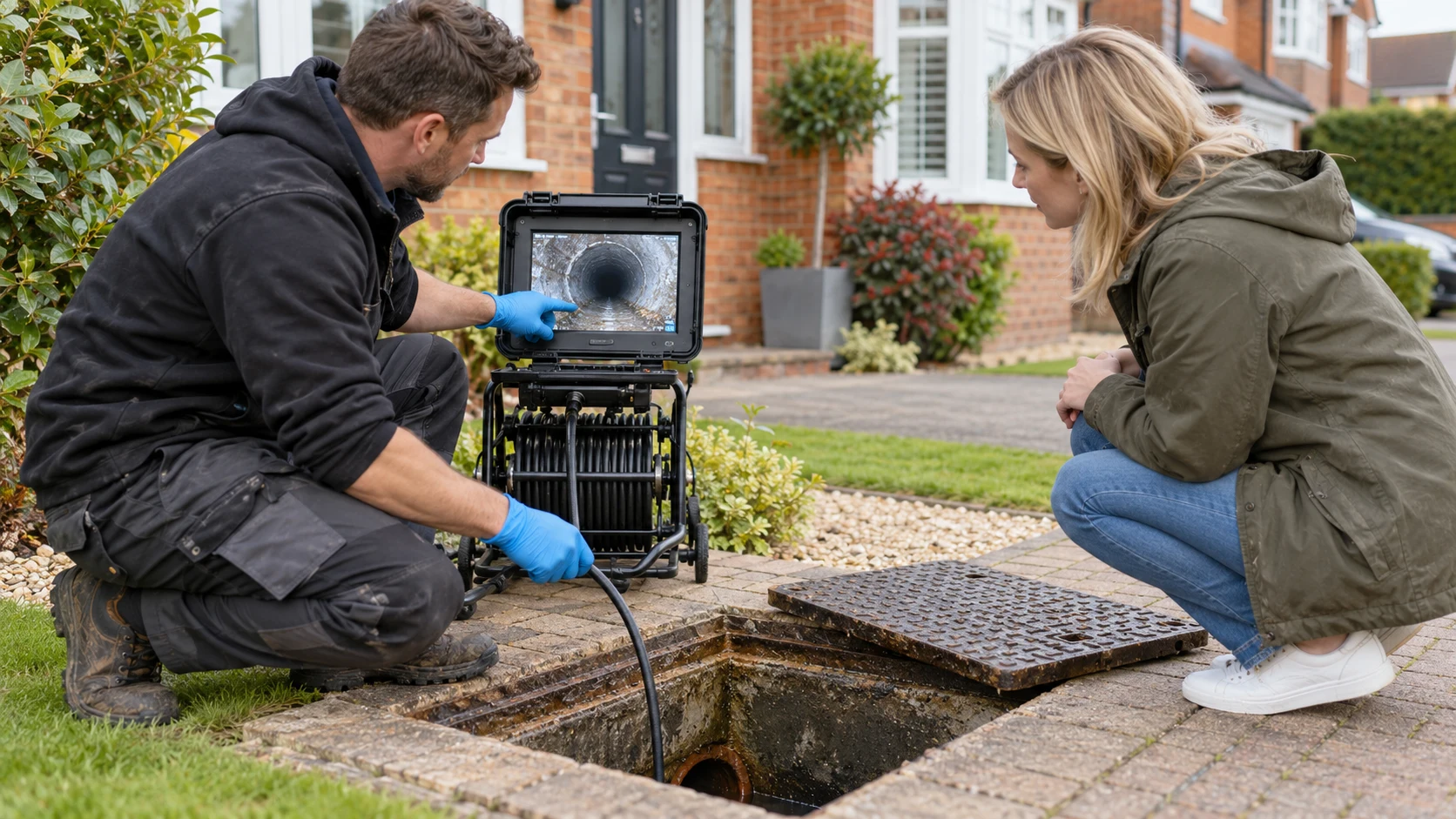
Illustrative photograph of a domestic drain camera survey being discussed with the homeowner.
The short answer
A CCTV drain survey is worth considering when blockages recur, damage is suspected or you need a record before purchase or renovation. For a one-off blockage that clears and stays clear, it may add little.
What a useful investigation looks like
An effective investigation begins with a question to be answered. The contractor should identify the section being inspected, explain whether the pipe needs clearing first and record where the camera has travelled. Findings should distinguish visible facts from suspected causes.
What matters in this situation
A camera can show visible defects, junctions, root intrusion and deposits, but cannot automatically diagnose ground movement or prove that every crack is leaking. The value depends on access, image quality, operator interpretation and whether the affected run is actually inspected.
Cases where a survey earns its keep
A camera is particularly useful where a blockage recurs, several drain-cleaning attempts have failed, a pipe defect is suspected or a repair quotation relies on an unseen problem. It can distinguish a build-up of waste from an intruding root, displaced joint or damaged pipe once the section has been adequately cleaned. For a one-off obstruction that clears fully and does not recur, a survey may be unnecessary. Ask the contractor what question the camera is expected to answer before agreeing to the extra cost.
What you should receive
A meaningful survey normally identifies access points, direction of travel, pipe material and approximate diameter, distances to noteworthy defects and a clear condition assessment. If the survey supports expensive repairs, request the recording and a written report identifying the evidence and proposed remedial options. Camera footage alone may not establish the exact route below ground; electronic tracing or additional inspection can be needed to locate a defect for excavation.
Know the limits of the camera
A camera shows the inside surface of the accessible pipe. It does not directly measure leakage through every joint, prove that a drain has caused subsidence or establish who legally owns the pipe. Water, grease, scale and bends can obstruct visibility. Where leakage is the central question, supplementary testing may be appropriate. A competent report should distinguish observed defects from possible causes and acknowledge inaccessible lengths rather than assuming that unseen sections are sound.
How to assess a repair recommendation
Ask to see the specific clip or still on which the proposed patch, liner or excavation is based. A narrow crack or slight irregularity does not automatically justify replacing an entire run. Compare the defect’s severity with evidence of actual poor drainage, leakage or progressive damage. If an expensive repair is proposed, an independent review of the footage can be money well spent.
The sensible next step
Before booking, ask what the price includes: footage, still images, condition report, pipe location, defect measurements and any repeat visit if the run needs clearing first. A report should lead to a proportionate recommendation, not an automatic expensive repair.
Understanding the result
Not every mark seen on a camera image requires repair. The importance of a defect depends on its size, position, effect on flow, evidence of leakage and the condition of the rest of the system. Ask for the footage as well as a conclusion.
Your water or sewerage company can also advise about public-network problems; see Water UK.
How to commission a useful survey
Describe the problem you want answered: a recurring blockage, suspected root ingress, a damaged pipe under a driveway or a possible link with building movement. Ask which drains will be covered and how inaccessible sections will be reported. A quote for filming one accessible run may be perfectly reasonable, but it should not be represented as a complete inspection of every branch. Where a repair is proposed, the footage should identify the location relative to a known chamber, which may require electronic tracing. If a house is being purchased, clarify whether the survey includes the kitchen, soil stack, outbuildings and surface-water connections. The report should make limitations clear and separate urgent defects from routine maintenance suggestions. Good evidence reduces the risk of both needless repair and a serious defect being overlooked.
Need a local drainage specialist?
If investigation or repairs are needed, you can use MyJobQuote to request contact from local drainage tradespeople.
Get quotes from local drainage specialists ↗