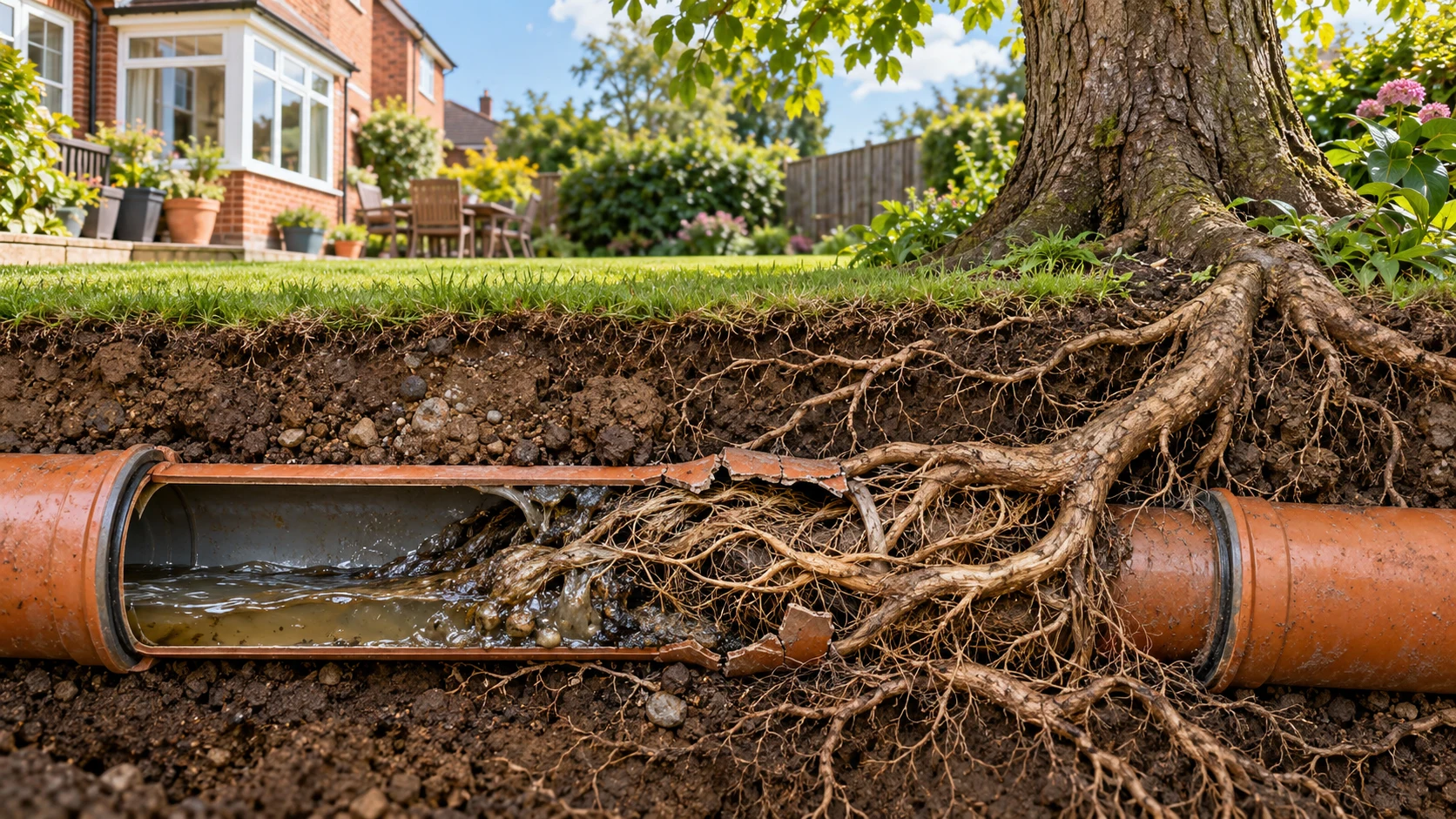
Illustrative cutaway showing typical root ingress and blockage beneath a garden.
The short answer
Fine roots can grow through a damaged joint and form a mat that catches paper and debris. A drain may initially run normally but begin blocking more frequently as the root mass expands.
Work out where the water originates
Surface flooding, wastewater surcharge, groundwater and ordinary rainwater runoff can look similar at first. The timing, smell, affected fittings and position relative to gullies or chambers help distinguish them. The right remedy depends on identifying the source.
What matters in this situation
Repeated blockages at the same location, especially where a CCTV inspection shows root entry, are more persuasive than the simple presence of a nearby tree. Not every recurring blockage is caused by roots; a flat pipe or displaced joint can produce similar symptoms.
Why the blockage keeps returning
Fine roots can enter through an open joint and form a mat that catches paper and grease. A first clearance may remove the immediate obstruction, but unless the opening is repaired, fresh growth can return. Roots are particularly troublesome at joints or cracks where there is moisture and space to grow. Their presence tells you where the pipe is vulnerable; it does not by itself identify whether the pipe moved first or the roots caused the damage.
Find the affected section
Ask the contractor to remove enough material to inspect the underlying pipe with CCTV. The footage should identify the location of the root entry, whether adjacent joints are sound and whether a displaced or collapsed pipe is also present. An electronic trace can mark the defect above ground, helping avoid unnecessary digging. If the roots are in a public sewer or a qualifying shared lateral, contact the sewerage company before commissioning repairs.
Choose a lasting remedy
Depending on the pipe condition, a targeted patch, relining or local excavation may close the entry point. A root cutter is a cleaning tool, not a permanent structural repair. If the pipe is badly misaligned, lining may not address the obstruction. Avoid removing trees solely on the strength of a single camera image without considering the wider property and ground conditions.
The sensible next step
Clearing the roots addresses the immediate obstruction, not necessarily the entry point. Ask whether a localised repair, lining or replacement is needed and whether the defect can be reached without extensive excavation.
Protect people and property first
Avoid contact with sewage and keep children and pets away from contaminated areas. Do not enter inspection chambers or lift unsafe covers. If a public sewer may be affected, tell the relevant sewerage undertaker; if buildings are at risk, seek appropriate urgent assistance.
For flooding and emergency information see GOV.UK flood information.
What to request after root cutting
Do not settle for confirmation that the water now flows. Ask where the roots entered, whether the entry is at one joint or spread over several sections, and whether the camera can inspect the cleaned pipe wall. A fine root mass trapped at a displaced joint may be different from extensive growth through a broken and partly collapsed run. The first may be amenable to local repair; the second may require excavation or replacement. A liner is not necessarily suitable if the pipe has lost alignment. Where a large tree is nearby, its position alone does not prove the cause or justify felling. The correct long-term response depends on pipe condition, available access, ownership and the risk of another obstruction. Keep the footage as a baseline if symptoms return.
Need a local drainage specialist?
If investigation or repairs are needed, you can use MyJobQuote to request contact from local drainage tradespeople.
Get quotes from local drainage specialists ↗