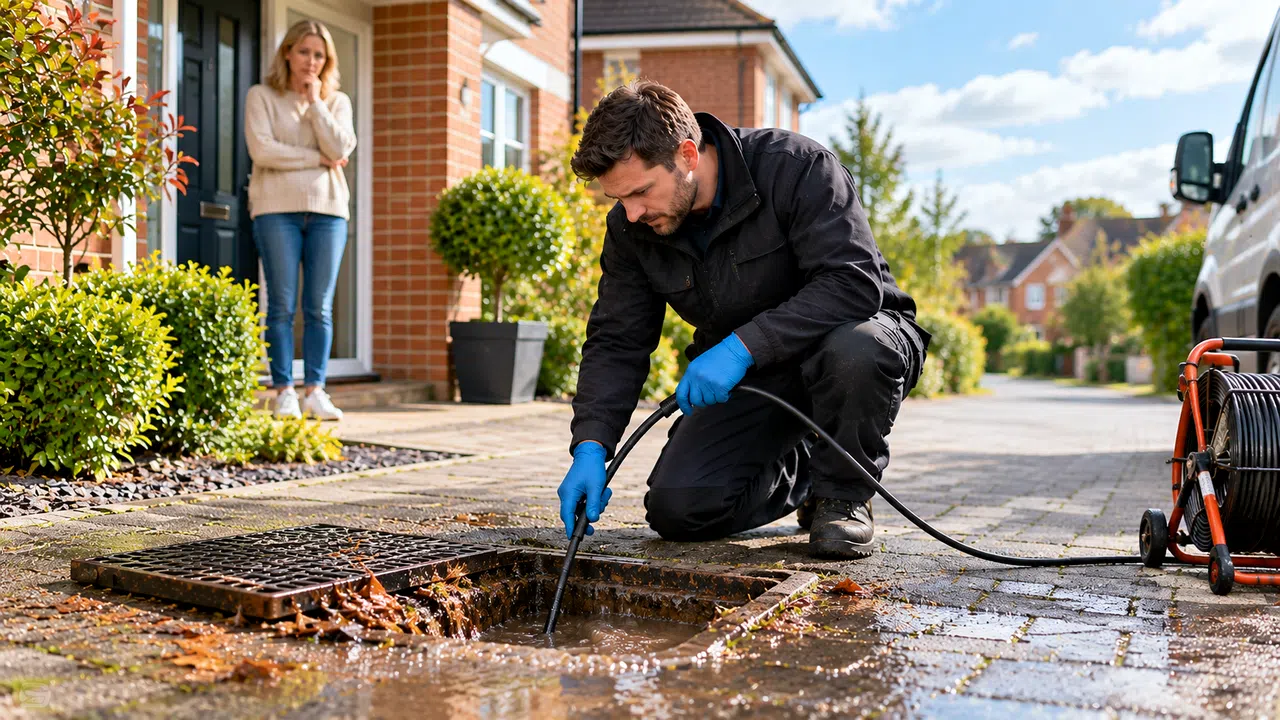
Illustrative image of the relevant drainage feature or investigation.
The short answer
A drain that keeps blocking may have more than one problem. Grease, wipes and other material can accumulate in an otherwise sound pipe, while roots, displaced joints or poor gradients create recurring snag points.
Work out where the water originates
Surface flooding, wastewater surcharge, groundwater and ordinary rainwater runoff can look similar at first. The timing, smell, affected fittings and position relative to gullies or chambers help distinguish them. The right remedy depends on identifying the source.
What matters in this situation
The interval between blockages is a useful clue. A pipe that blocks again within days after thorough cleaning deserves a different investigation from one that has worked for years. Record which fixtures are affected and whether the problem worsens after rain.
Where the blockage is makes a difference
A kitchen sink that alone drains slowly may have grease or food residue in its trap or waste pipe. Several fixtures backing up together point towards a common downstream restriction. An outside chamber that fills when a toilet flushes may indicate a blockage beyond that chamber. Record which fixtures are affected and whether the problem returns at the same frequency; those observations help the contractor decide where to investigate rather than simply jetting from the nearest access point.
When repeated clearing is not enough
A recurring blockage can be caused by root entry, a displaced clay joint, inadequate fall, a local collapse or deposits that have not been fully removed. Some old drains have minor defects that do not impede flow, so the camera finding must be weighed against the symptoms. Ask for a post-clearance CCTV inspection if the same drain has blocked several times. A good report should show the location and extent of any significant defect and distinguish cleaning from repair.
Choosing the next action
If a defect is localised, a short patch or excavation may be sufficient. Lining may help in a suitable pipe but cannot correct a major sag or collapse. If the affected pipe serves neighbouring properties, check whether the sewerage undertaker is responsible before arranging private repairs. For an active sewage backup, stop using affected fixtures and seek urgent help rather than trying repeated chemical drain cleaners.
The sensible next step
Ask what was removed during each clearance and at which point. A CCTV survey can be useful after repeated incidents, but ask to see the defect and its location before agreeing to excavation or lining.
Protect people and property first
Avoid contact with sewage and keep children and pets away from contaminated areas. Do not enter inspection chambers or lift unsafe covers. If a public sewer may be affected, tell the relevant sewerage undertaker; if buildings are at risk, seek appropriate urgent assistance.
For flooding and emergency information see GOV.UK flood information.
What a good answer from a contractor sounds like
You should be told which run is affected, what was removed, whether the obstruction was soft waste or fixed to the pipe, and what makes recurrence likely. A recommendation for replacement should be backed by a defect location and footage, not simply the number of call-outs. Ask whether the drain has a continuous fall and whether the camera reached the downstream connection. If tree roots were removed, their entry point may need repair. If the pipe was merely full of grease, cleaning and better waste disposal may solve the issue without excavation. Keep records of dates and previous work so different contractors do not repeat the same investigation. If wastewater backs up in several homes, check with the sewerage company before paying privately for a shared run.
Need a local drainage specialist?
If investigation or repairs are needed, you can use MyJobQuote to request contact from local drainage tradespeople.
Get quotes from local drainage specialists ↗