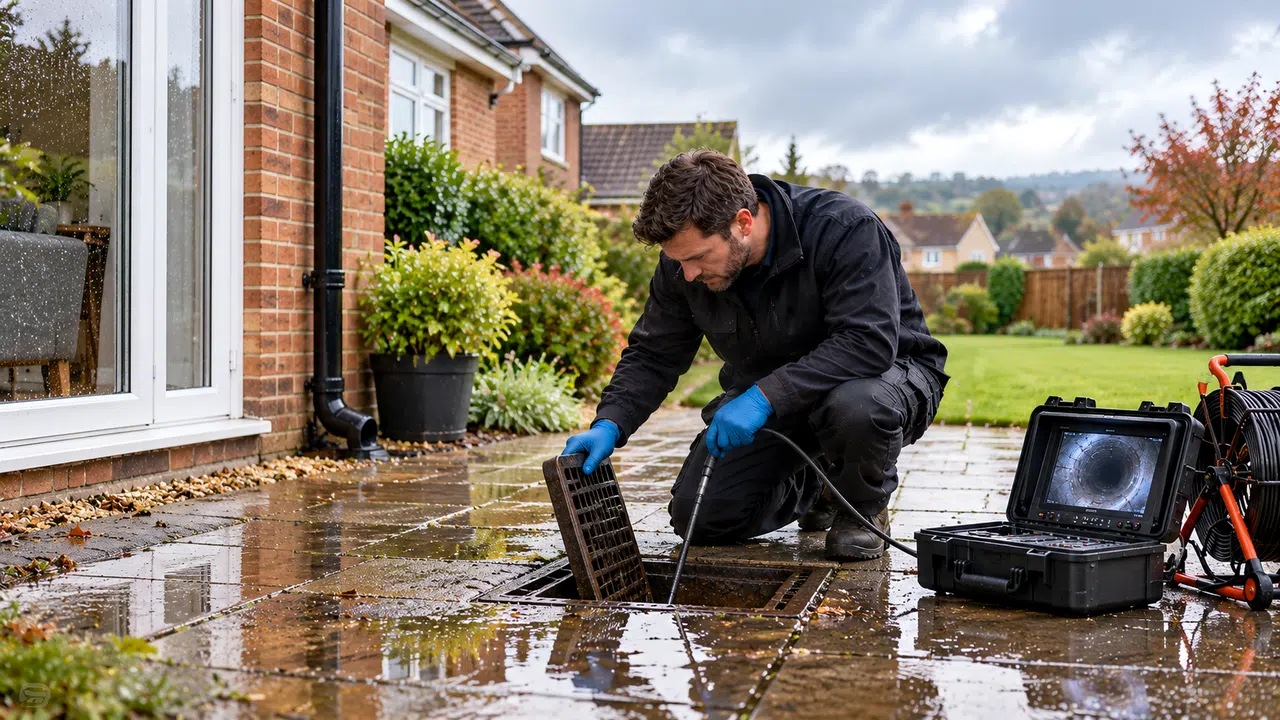
Illustrative image of the relevant drainage feature or investigation.
The short answer
Water around an inspection-chamber cover may be surface runoff collecting at a low point or wastewater escaping from a surcharged drain. A wet cover after rain is not enough to prove a sewer fault.
Work out where the water originates
Surface flooding, wastewater surcharge, groundwater and ordinary rainwater runoff can look similar at first. The timing, smell, affected fittings and position relative to gullies or chambers help distinguish them. The right remedy depends on identifying the source.
What matters in this situation
Observe whether water emerges from the cover, contains sewage or rises when household fixtures are used. Multiple affected properties can suggest a public sewer issue. Photograph safely rather than lifting a heavy lid.
Is it overflowing or collecting on the surface?
Water can pool around a manhole because the surrounding paving has settled or because the cover frame sits in a shallow hollow. That is a surface drainage issue unless water is actually escaping from below the lid. If the chamber is surcharging, the cause may be a downstream obstruction or an overloaded sewer. The distinction matters because the apparent source of water can mislead, especially after heavy rain.
Useful observations
Record whether the water appears during dry weather, after using household fixtures or only during storms. A sewage smell, debris around the cover or water rising from the frame are more concerning than clean rainwater gathering in a depression. Do not remove heavy covers or stand over a surcharging chamber. If more than one property is affected, report it to the wastewater company and ask whether the run is public.
What repairs could be necessary
A damaged frame or incorrectly graded paving may need local reinstatement. If wastewater is escaping, the drainage route requires investigation and possibly clearing or structural repair. A CCTV survey may help once levels fall. Do not fill the hollow with paving material until you know whether the chamber needs access or whether sewage has undermined the surrounding ground.
The sensible next step
Contact the responsible sewerage undertaker if public sewer surcharge is suspected. An engineer may need to inspect chamber levels and the connected pipe run before any repair is recommended.
Protect people and property first
Avoid contact with sewage and keep children and pets away from contaminated areas. Do not enter inspection chambers or lift unsafe covers. If a public sewer may be affected, tell the relevant sewerage undertaker; if buildings are at risk, seek appropriate urgent assistance.
For flooding and emergency information see GOV.UK flood information.
Avoid overlooking the cover and surrounding surface
Some puddles are caused by paving laid lower than the metal frame, leaving a shallow basin. They can look like an underground leak although the chamber remains dry. Conversely, a surcharging chamber can push wastewater out around the cover and carry silt or debris onto the surface. Never try to weigh down or seal a surcharging lid: pressure and sewage need professional assessment. Record the event from a safe position and identify whether it coincides with a flush or rainfall. If the cover is damaged or rocking under traffic, the frame may require urgent attention regardless of the drain condition. After the cause is established, the contractor should specify whether the remedy involves clearing the pipe, resetting the cover frame or changing the paving fall. These jobs have different costs and responsibilities.
Need a local drainage specialist?
If investigation or repairs are needed, you can use MyJobQuote to request contact from local drainage tradespeople.
Get quotes from local drainage specialists ↗