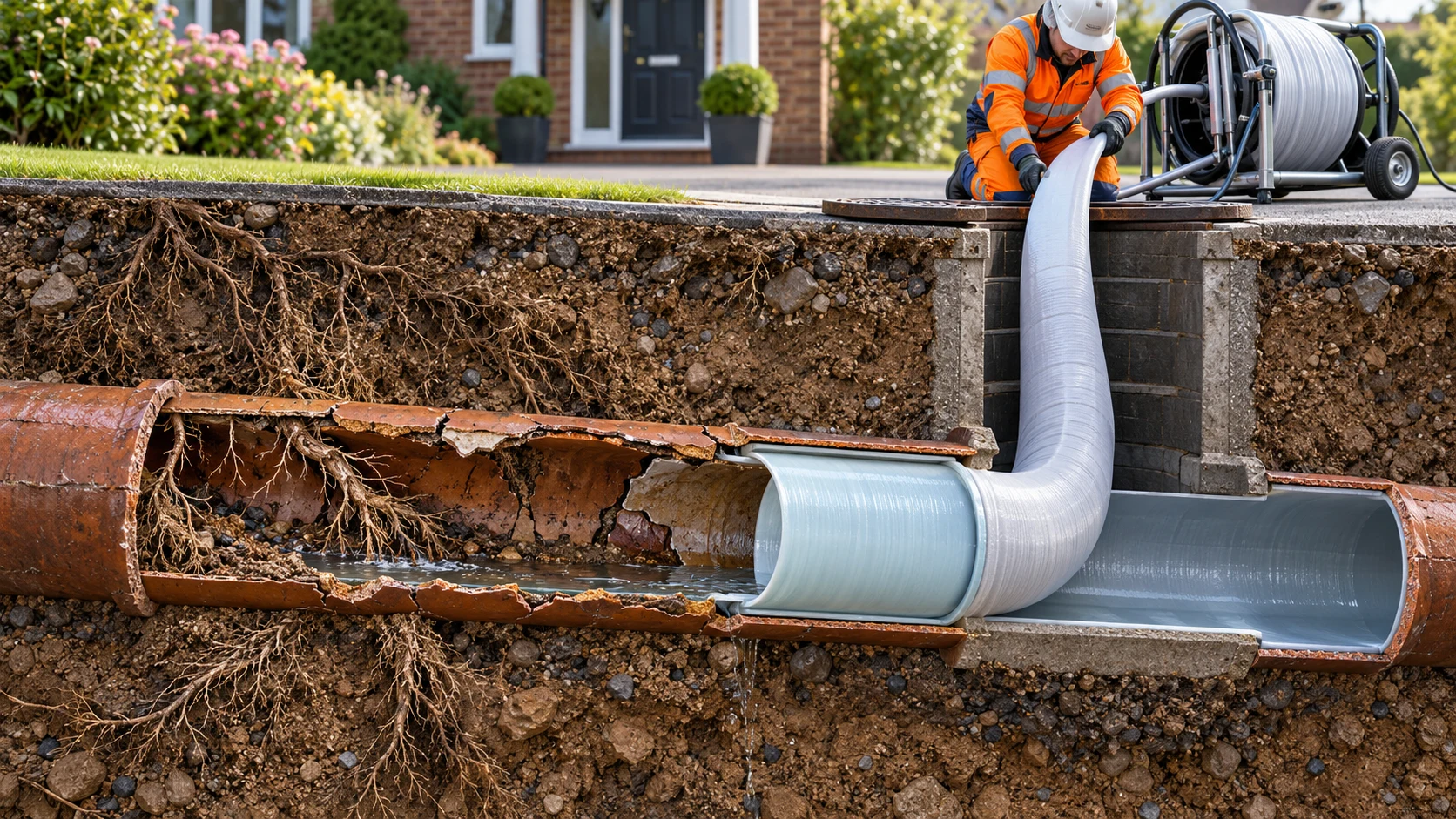
Illustrative cutaway showing relining as a repair method.
The short answer
Drain relining forms a new internal lining within an existing pipe, often without excavating the full length. It can seal some cracks and joints, provided the host pipe has a suitable shape and access.
Match the remedy to the defect
A repair ought to correct an identified problem, not just the symptom that brought the contractor out. Cleaning, localised repair, lining and replacement each have a place, but none is right for every drain. The shape, fall, access and condition of the host pipe can rule methods in or out.
What matters in this situation
Lining does not correct every problem. A severely deformed or collapsed section, inadequate fall or substantial displacement may require excavation or preparatory work. Connections and access must remain functional after installation.
What happens during a lining job
After a condition survey, the contractor cleans and prepares the host pipe, measures the section and installs a resin-impregnated liner or another specified lining system. The liner is expanded against the inside of the existing pipe and cured using the chosen process. Once cured, the contractor may reopen lateral connections and inspect the finished installation. Methods and materials vary, so ask exactly what system is proposed, how it will be cured and what evidence will demonstrate that the result is sound.
Where lining is a poor fit
Lining can seal suitable cracks and leaking joints, but it cannot restore an inadequate gradient, remove a major belly holding water or reliably repair a pipe that has collapsed and lost its shape. Excessive deformation, large offsets, missing pipe sections, badly intruding connections or inaccessible bends may prevent installation. Some defects need excavation or a combination of methods. Ask for the pre-repair CCTV footage and the reason the proposed liner is suitable for that specific diameter, length and defect.
Compare the entire cost and disruption
The quote should identify access points, preparation, removal of roots or deposits, liner length, curing method, junction reopening, waste disposal and any post-repair CCTV survey. Ask whether the liner reduces internal diameter materially, how flow and connections will be checked and what warranty applies. Excavating one short, shallow damaged section might be more economical than lining a long run. Equally, relining beneath a finished floor or driveway can avoid extensive disruption when conditions are suitable.
How to check the completed work
Request a copy of the post-lining CCTV record with the repaired section clearly identified. It should show that the liner terminates correctly, joints are smooth enough for normal flow, connections remain open and no obvious installation defects are present. Keep the product and installation details with your house records. If the contractor proposes further repairs because a liner did not seat properly, obtain a clear explanation before accepting additional charges.
The sensible next step
Before agreeing, request a condition survey, proposed liner specification, method of cleaning, junction treatment and an inspection after curing. Compare lining with targeted excavation when the defect is localised.
Before authorising expensive work
Obtain a written scope, evidence of the defect and what happens if additional damage is discovered. Ask whether reinstatement and a post-repair camera check are included. A second opinion can be sensible where the proposed work is extensive.
For guidance on agreeing work with a contractor see Citizens Advice on home improvement work.
Questions about durability and suitability
The effectiveness of a liner depends on the existing pipe and the installation, not simply the product name. Ask how the installer will verify that the wall is clean enough for proper contact, how the liner will negotiate bends, and what happens at junctions or chambers. Curing requirements may depend on temperature and the material system, so the contractor should be able to describe its quality checks. A pipe with heavy standing water caused by poor fall can remain slow after lining, even if the cracks are sealed. Equally, a local patch may be all that is needed for a single defect. Retain drawings or marked CCTV chainages because future contractors will need to know where the liner begins and ends. If a warranty is provided, check whether it covers the installed liner or promises the performance of the whole older drainage system.
Need a local drainage specialist?
If investigation or repairs are needed, you can use MyJobQuote to request contact from local drainage tradespeople.
Get quotes from local drainage specialists ↗