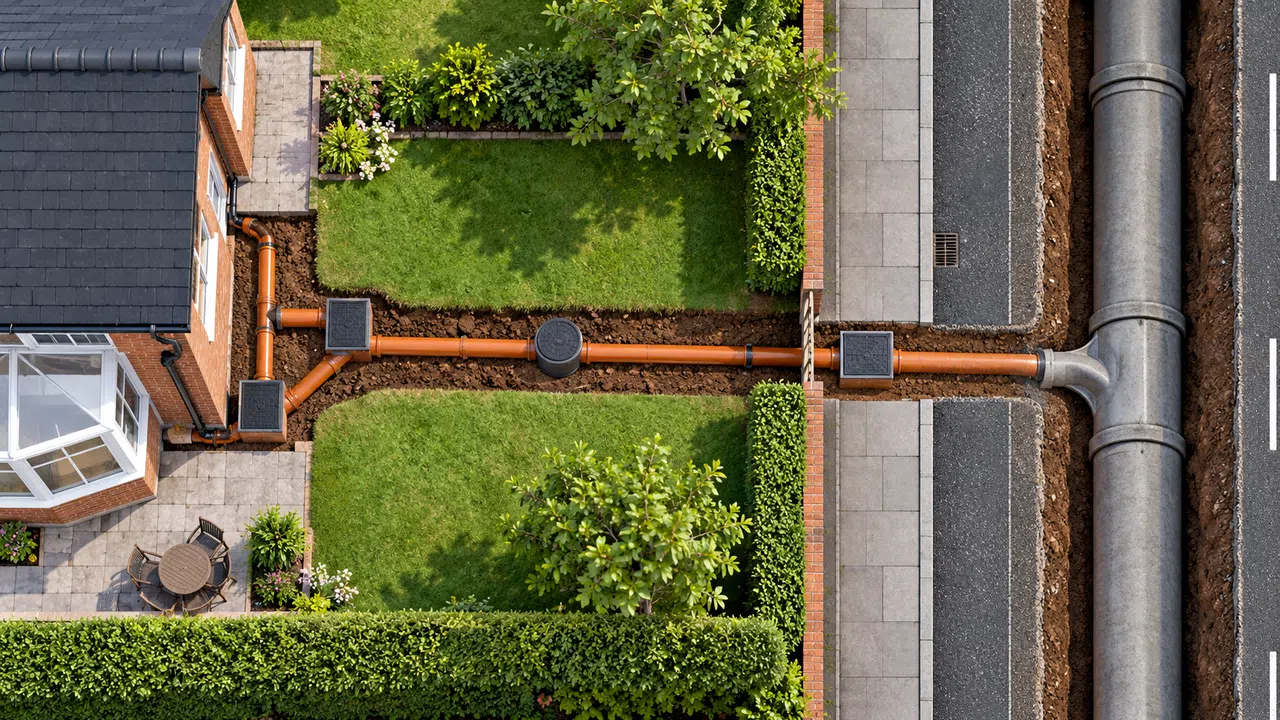
Illustrative image of the relevant drainage feature or investigation.
The short answer
A soakaway disposes of suitable surface water by allowing it to infiltrate surrounding ground. It may fail because soil drains poorly, the structure is clogged with silt, groundwater is high or the system is undersized.
Work out where the water originates
Surface flooding, wastewater surcharge, groundwater and ordinary rainwater runoff can look similar at first. The timing, smell, affected fittings and position relative to gullies or chambers help distinguish them. The right remedy depends on identifying the source.
What matters in this situation
A soaked lawn after prolonged rain is not proof the soakaway has collapsed. Test where the water comes from, how the ground behaves and whether the original arrangement was designed for current roof and paving areas.
How soakaways should function
A soakaway allows collected surface water to infiltrate into suitable ground rather than sending it directly to a sewer. Performance depends on the soil’s infiltration capacity, groundwater level, size of storage, distance from buildings and how much runoff reaches it. Modern systems may use modular crates or other engineered storage. An old rubble-filled pit may have limited capacity and can become clogged with silt over time.
Common reasons for failure
Blocked connecting pipes, silting, poor original design, saturated soil and groundwater conditions can all prevent water dispersing. A soakaway that works in summer may struggle during long periods of wet weather. A low garden can also flood from sources unrelated to the soakaway. A CCTV survey of the inlet can find a blockage but will not by itself measure whether the surrounding soil can absorb the required volume.
Before replacing it
Ask for the route, catchment area and discharge point to be established. Proper infiltration testing and design may be needed before constructing another soakaway; placing one close to foundations can create risk. The right solution may be maintaining silt traps, repairing connections or redesigning the surface-water system. Check building regulations and local requirements rather than assuming any new pit is acceptable.
The sensible next step
Installing a larger soakaway is not always the answer. Site-specific infiltration testing, suitable separation from buildings and compliance with relevant requirements are important. Seek specialist design advice before diverting flows.
Protect people and property first
Avoid contact with sewage and keep children and pets away from contaminated areas. Do not enter inspection chambers or lift unsafe covers. If a public sewer may be affected, tell the relevant sewerage undertaker; if buildings are at risk, seek appropriate urgent assistance.
For flooding and emergency information see GOV.UK flood information.
Why size alone is not the answer
A soakaway has to store incoming water temporarily and release it into the ground at a rate the soil can accept. Increasing storage may help with short bursts of rainfall, but it does not solve soil that cannot infiltrate at a useful rate. The contributing roof or driveway area matters, as do the distance from foundations and any high groundwater. An old soakaway can also lose capacity as silt and fine sediment accumulate. Ask whether a silt trap and accessible inspection point are included in the design. If the original outfall is unknown, tracing the pipe may avoid excavating the wrong area. Any replacement should follow appropriate design and building guidance. A contractor should be able to explain why the proposed capacity and location suit the particular ground, not merely recommend another pit.
Need a local drainage specialist?
If investigation or repairs are needed, you can use MyJobQuote to request contact from local drainage tradespeople.
Get quotes from local drainage specialists ↗