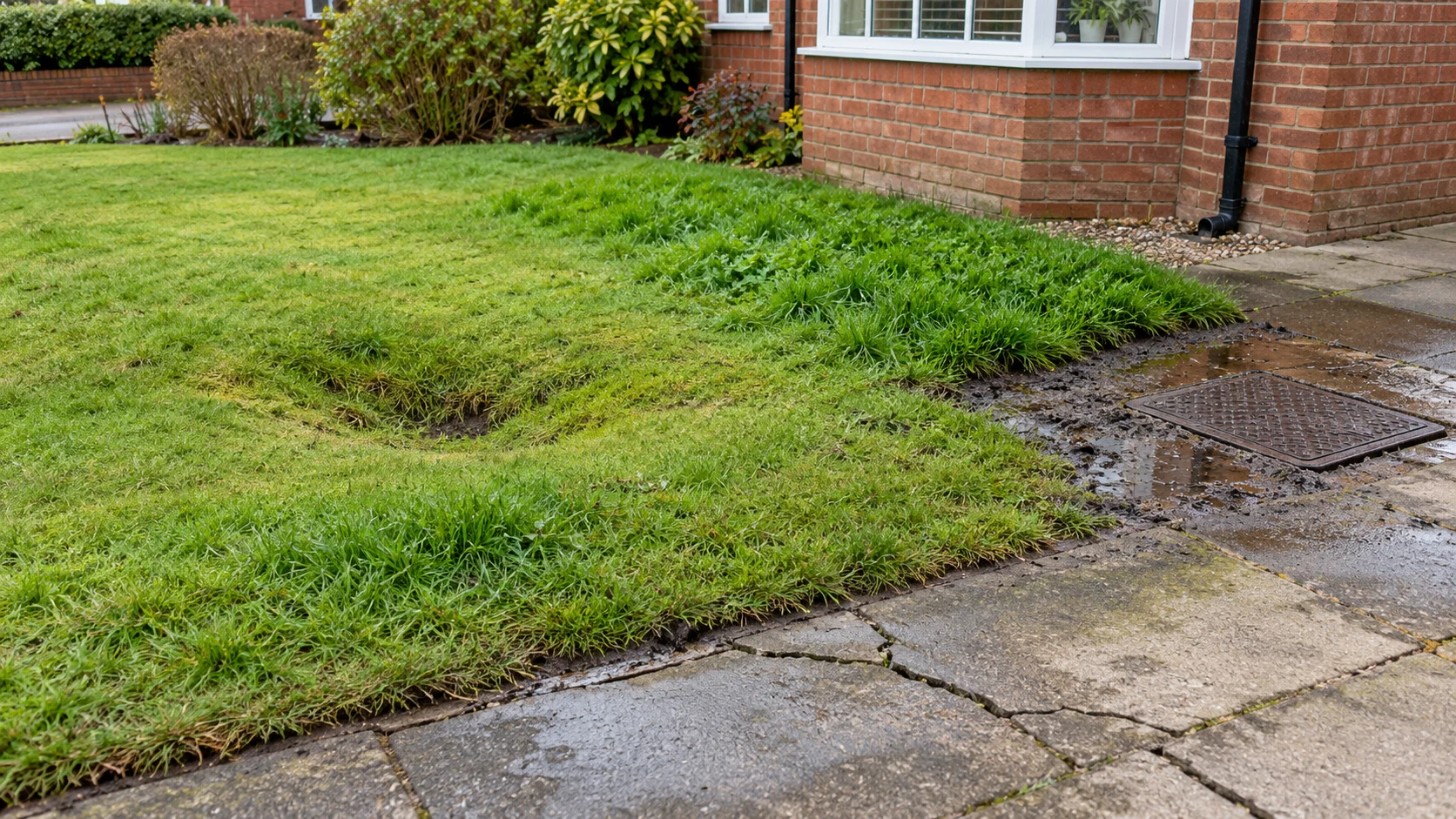
Illustrative photograph; a drainage survey is needed to establish the actual fault.
The short answer
A leaking underground drain can soften, wash out or alter the moisture content of nearby ground. In susceptible soils and at the wrong location, this may contribute to settlement or movement. A cracked pipe does not, by itself, prove that a house is subsiding.
Work out where the water originates
Surface flooding, wastewater surcharge, groundwater and ordinary rainwater runoff can look similar at first. The timing, smell, affected fittings and position relative to gullies or chambers help distinguish them. The right remedy depends on identifying the source.
What matters in this situation
Look at the location and history of the cracking, the foundation type and whether drain leakage has actually been established. Seasonal clay shrinkage, trees, historic movement and building alterations are other possible explanations. A CCTV image of a pipe joint cannot determine foundation movement.
How drainage defects can affect the ground
Escaping water may soften or wash fine particles from some soils or affect moisture conditions around foundations. Whether that causes measurable movement depends on the soil, depth of foundations, volume and duration of leakage, drainage layout and other influences. In shrinkable clay, changes in moisture can contribute to movement, but the mechanism differs from erosion in more granular ground. A cracked underground pipe alone does not establish that a house is subsiding, and not every foundation crack is caused by drains.
What evidence an investigation needs
An appropriate assessment may combine CCTV footage, drain tracing, leakage testing, site drainage plans, building crack patterns and ground information. A survey finding of an open joint near a crack in the wall is a reason to examine the relationship, not proof of cause and effect. A structural engineer or appropriately qualified surveyor may need to assess movement, history and possible monitoring. If the property has previously had an insurance subsidence claim, retain all former investigation records.
Priorities before major repairs
If sewage is escaping, the damaged drain may need urgent attention even while movement is being investigated. Identify pipe ownership first, particularly for shared or public runs. Ask for the specific pipe defect and repair plan to be recorded before it is concealed. Do not assume that relining alone addresses ground voids or that underpinning is necessary. Decisions about ground treatment and structural repairs should follow the wider diagnosis rather than the drainage contractor’s opinion alone.
The sensible next step
Where there are progressive building cracks or distorted openings, seek suitably qualified structural advice and consult your buildings insurer about policy requirements before authorising intrusive works. Any drainage repair should address a demonstrated defect, not an assumed cause of subsidence.
Protect people and property first
Avoid contact with sewage and keep children and pets away from contaminated areas. Do not enter inspection chambers or lift unsafe covers. If a public sewer may be affected, tell the relevant sewerage undertaker; if buildings are at risk, seek appropriate urgent assistance.
For flooding and emergency information see GOV.UK flood information.
Avoid confusing coincidence with cause
A crack in a wall and a cracked drain beneath it can appear together because both were affected by the same ground movement. In other cases, leakage may have altered the support beneath the foundations. Those explanations require different responses. A drainage report should identify where the pipe is damaged, whether there is evidence of leakage and whether the route lies near the affected part of the building. A structural investigation may consider the crack pattern, foundation depth, soil characteristics and whether movement is ongoing. If the drain is repaired, it does not follow that building movement will stop immediately or that an earlier subsidence diagnosis was correct. Keep records of any monitoring and speak to the insurer before expensive structural work where an insured subsidence event is possible. Neither underpinning nor comprehensive drain replacement should be assumed from one piece of evidence.
Need a local drainage specialist?
If investigation or repairs are needed, you can use MyJobQuote to request contact from local drainage tradespeople.
Get quotes from local drainage specialists ↗